Should You Elect to Forgo Preferential Tax Treatment on Capital Gains and Dividends?

Source: CPA Advisor
Depending on your situation, you might elect to forgo preferential tax treatment on certain long-term capital gains and qualified dividends in favor of deducting investment interest expenses.
n the 2024 presidential election year, you may have another important election to consider, although this one is on your personal tax return. Depending on your situation, you might elect to forgo preferential tax treatment on certain long-term capital gains and qualified dividends in favor of deducting investment interest expenses.
Background: Generally, the tax law allows you to deduct the investment interest expenses you incur during the year—for example, when you buy stock on margin— but only up to the amount of your net investment income. Any excess must be carried over to the next year. Therefore, you may derive little or no tax current tax benefit from these expenses.
For these purposes, the definition of “net investment income” differs from the one used in the computation of the 3.8% net investment income tax (NIIT) that applies to certain high-income investors. As far as the tax deduction goes, NII is equal to yourinvestment income reduced by investment expenses other than interest. “Investment income” includes items such as interest, dividends, royalties, gains from sales of investment property and income from annuities. “Investment expenses” are income-producing expenses that constitute allowable deductions.
Surprisingly, however, long-term capital gain and qualified dividends, which generally receive tax-favored treatment, do NOT count as investment income under the tax law definition. Usually, the maximum tax rate on long-term capital gains and qualified dividends is only 15%, or at worst 20% for high-income taxpayers. This rule could significantly limit your investment interest deduction. In fact, you may not be entitled to any deduction at all.
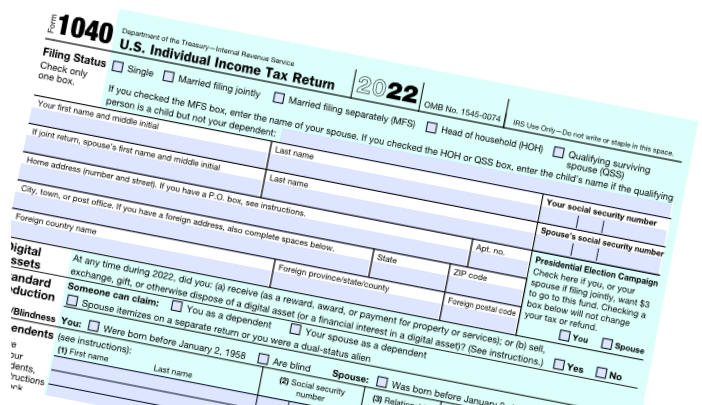
Another option: Alternatively, you can elect to include long-term gains and/or qualified dividends in the computation of net investment income to the extent that you want, but you must reduce the gain eligible for the maximum tax rate by the same amount. Even better: You can cherry-pick the long-term capital gains/dividends affected by this decision. This election is made when you file your 2023 tax return.
Have your tax return preparer crunch the numbers for you. The election may save you hundreds or even thousands of tax dollars.
Example: Say that your top ordinary income tax rate is 35%. In 2023, you realized $5,000 in long-term capital gains last year, plus you incurred $4,000 in investment interest expenses above your net investment income.
If you elect to forego the tax break on $4,000 of your capital gains, you can deduct an extra $4,000 of investment interest expenses. Accordingly, instead of paying $600 in tax on those capital gains (15% of $4,000), your tax bill for the capital gains is $1,400 (35% of $4,000), or $800 more. However, the increase in the investment interest is worth $1,400 to you. Bottom line: You save $600 overall ($1,400 – $800). The savings would be even greater for someone in the top 37% tax bracket.
Of course, other tax complications, such as limits on passive activities, may affect the outcome. Unless you have the requisite expertise, this is not a do-it-yourself proposition. Rely on your tax professional for assistance.
Read more Insights